Solid Color Epoxy Floor Coating Kits — Shop by Color
1-Day Solid Color Epoxy Floor Coating — Simple, Fast, and Built for Working Spaces
This is the simplest professional coating system we offer — just two coats of Polyaspartic 85 and a single container of RZ Tint. No broadcast media, no scraping, no vacuuming. Pick a color, coat the floor, done.
- Why solid color? If you use your garage or workshop for hands-on projects — wrenching on cars, woodworking, assembling equipment — a solid color floor is a practical choice. Dropped bolts, small parts, drill bits, and hardware are nearly impossible to find on a busy chip or quartz pattern. A solid color floor gives you a clean, high-contrast surface where nothing disappears.
- Step 1 — Polyaspartic 85 Primer Coat — Applied first at 300 sq ft/gal with a flexible squeegee. No tint in this layer. This thin coat seals the concrete, eliminates air pockets that cause bubbling, and gives the color coat a prepared surface to bond to.
- Step 2 — Polyaspartic 85 Color Coat — Applied over the cured primer at 200 sq ft/gal. RZ Tint is added at 6 oz per gallon — a heavier dose than standard to achieve a fully saturated, opaque solid color. Spread with a notched squeegee and backrolled with a ¼” nap roller. This coat is the finished surface — no top coat required.
- Complete in 1 Day — The recoat window for Polyaspartic 85 is 4–6 hours, meaning you can apply both coats and be completely done in a single day. Mix at low speed for 30–60 seconds and pour immediately after mixing.
- A real protective coating — not paint. This system bonds chemically to the concrete, resists chemicals and abrasion, and won’t peel under normal conditions. It’s not as heavy-duty as a chip or quartz broadcast system, but for workshops, utility rooms, and spaces where clarity matters more than texture, it’s more than adequate and significantly faster to install.
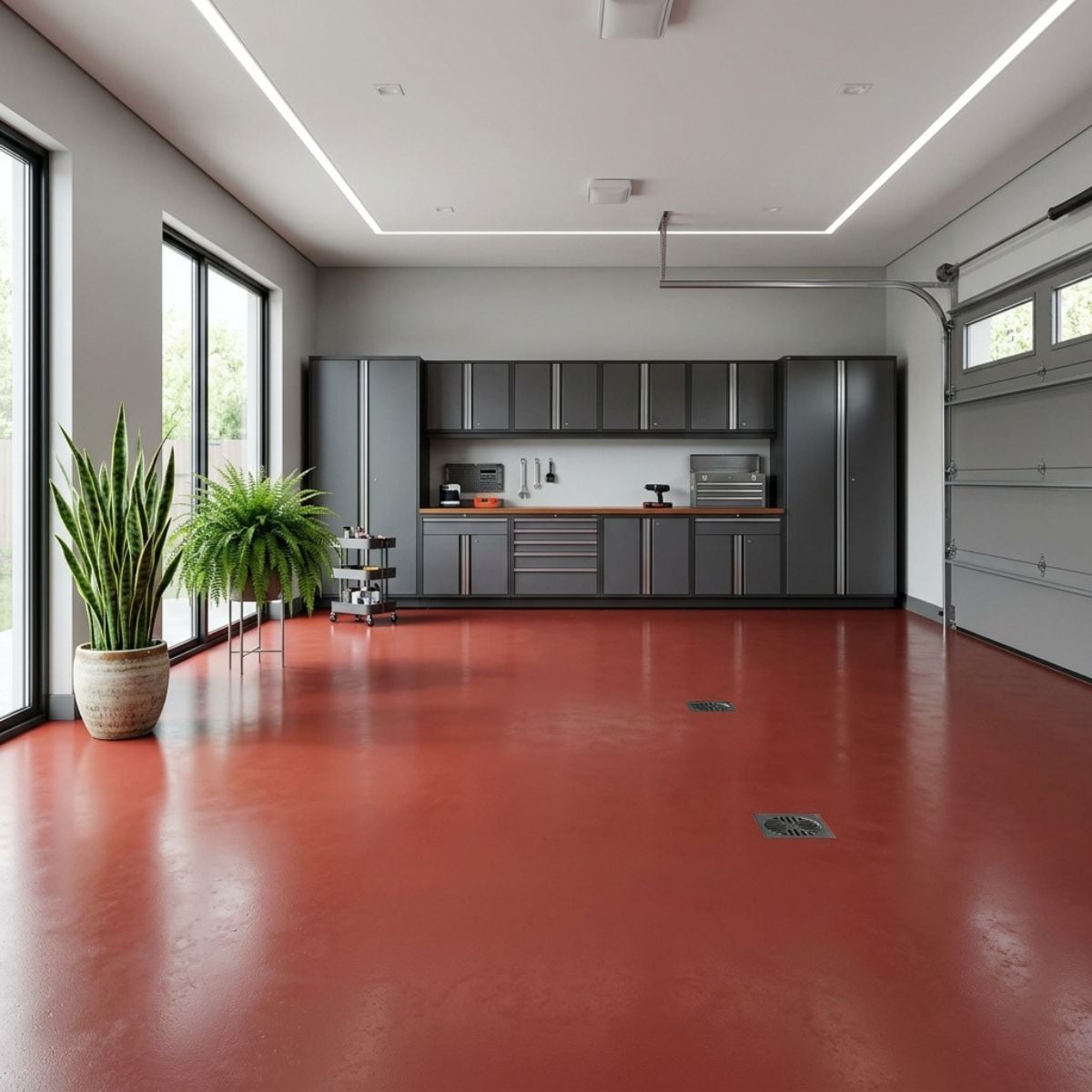
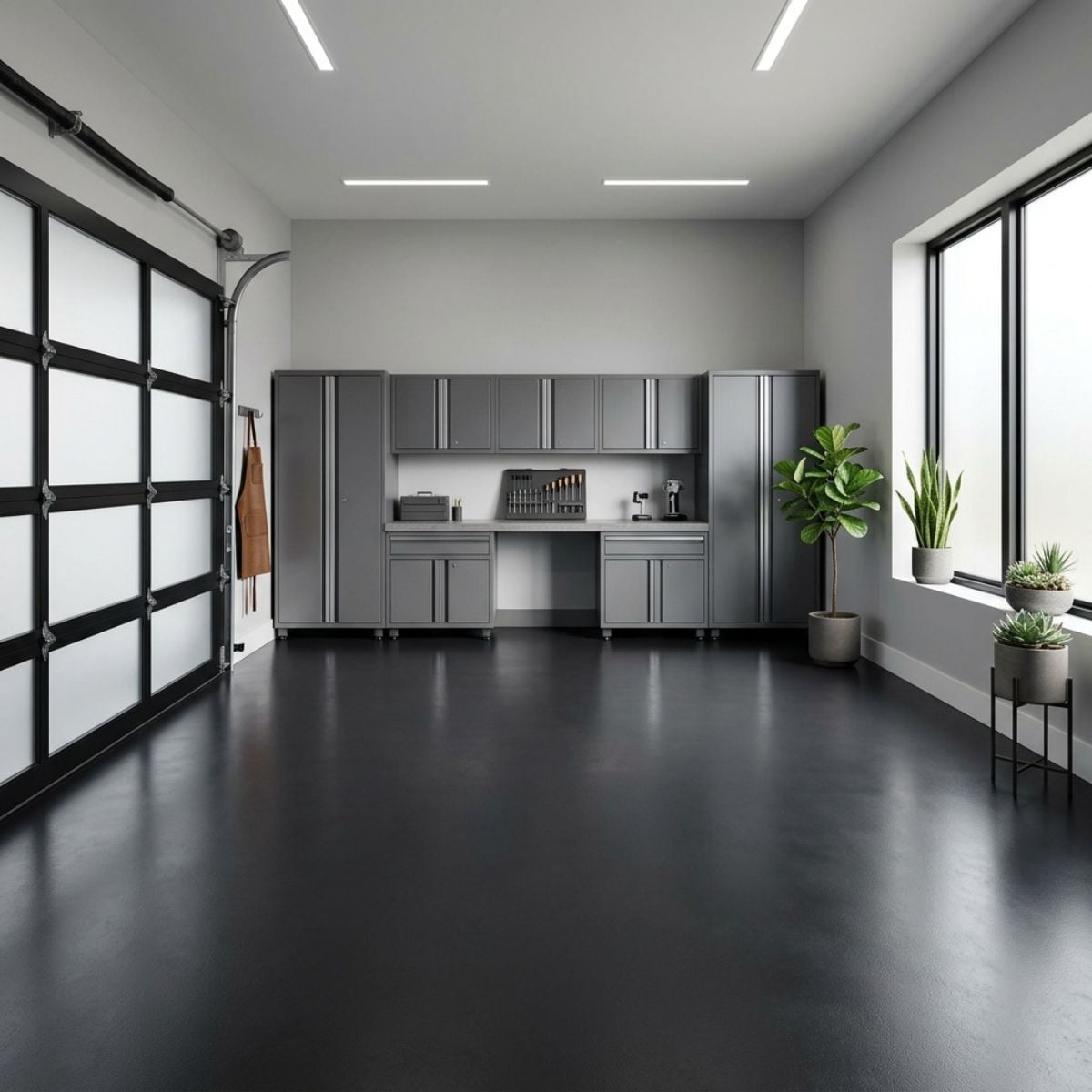
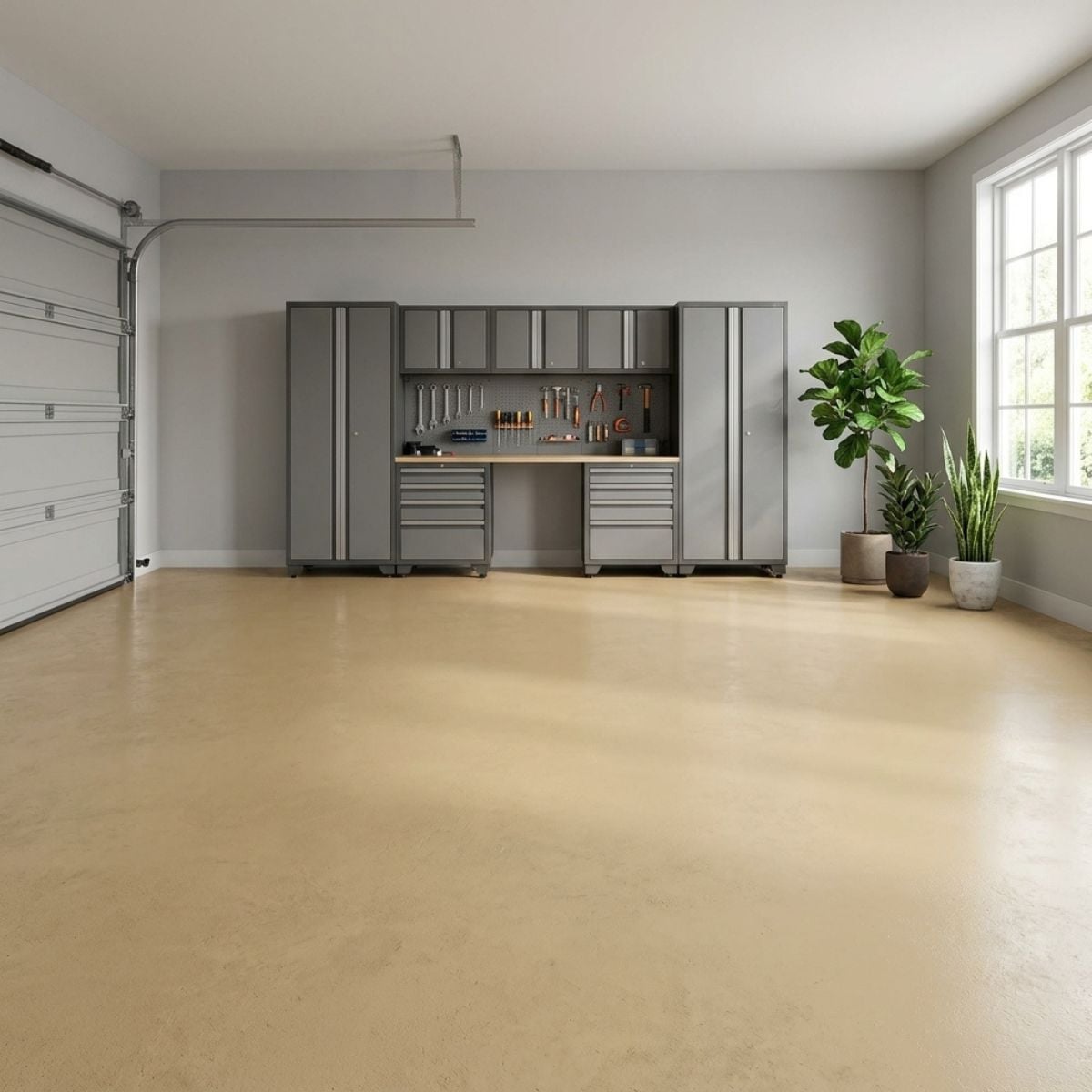
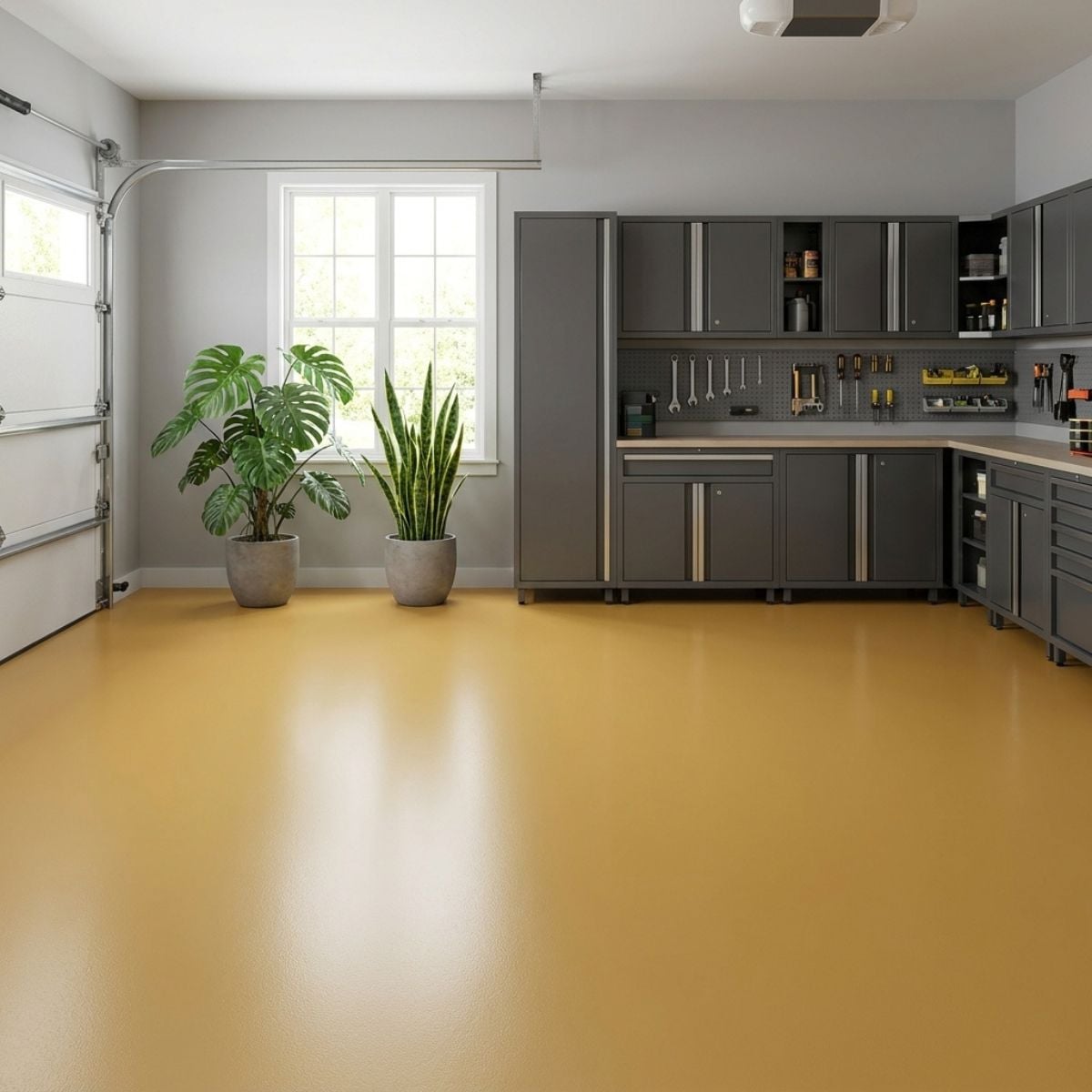
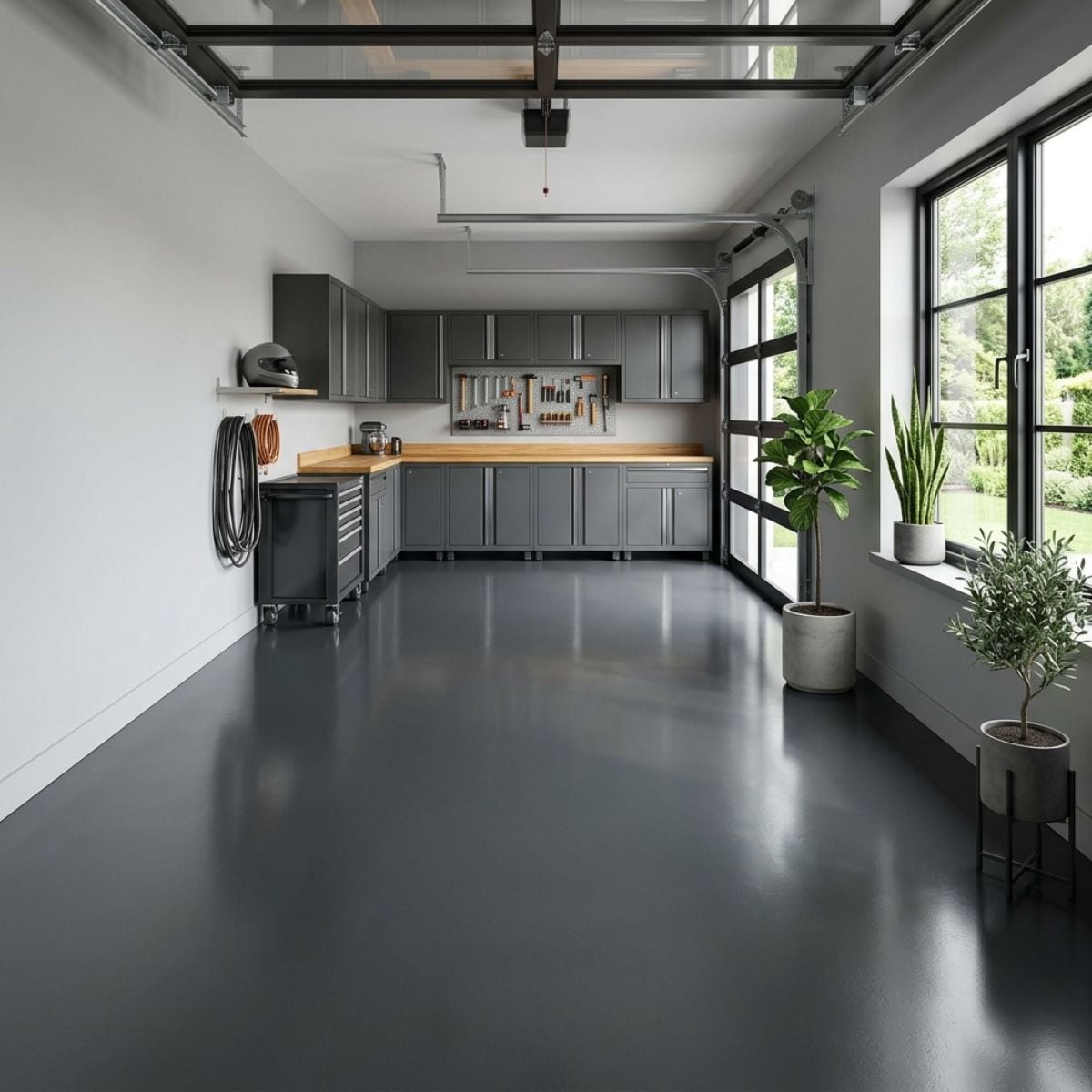
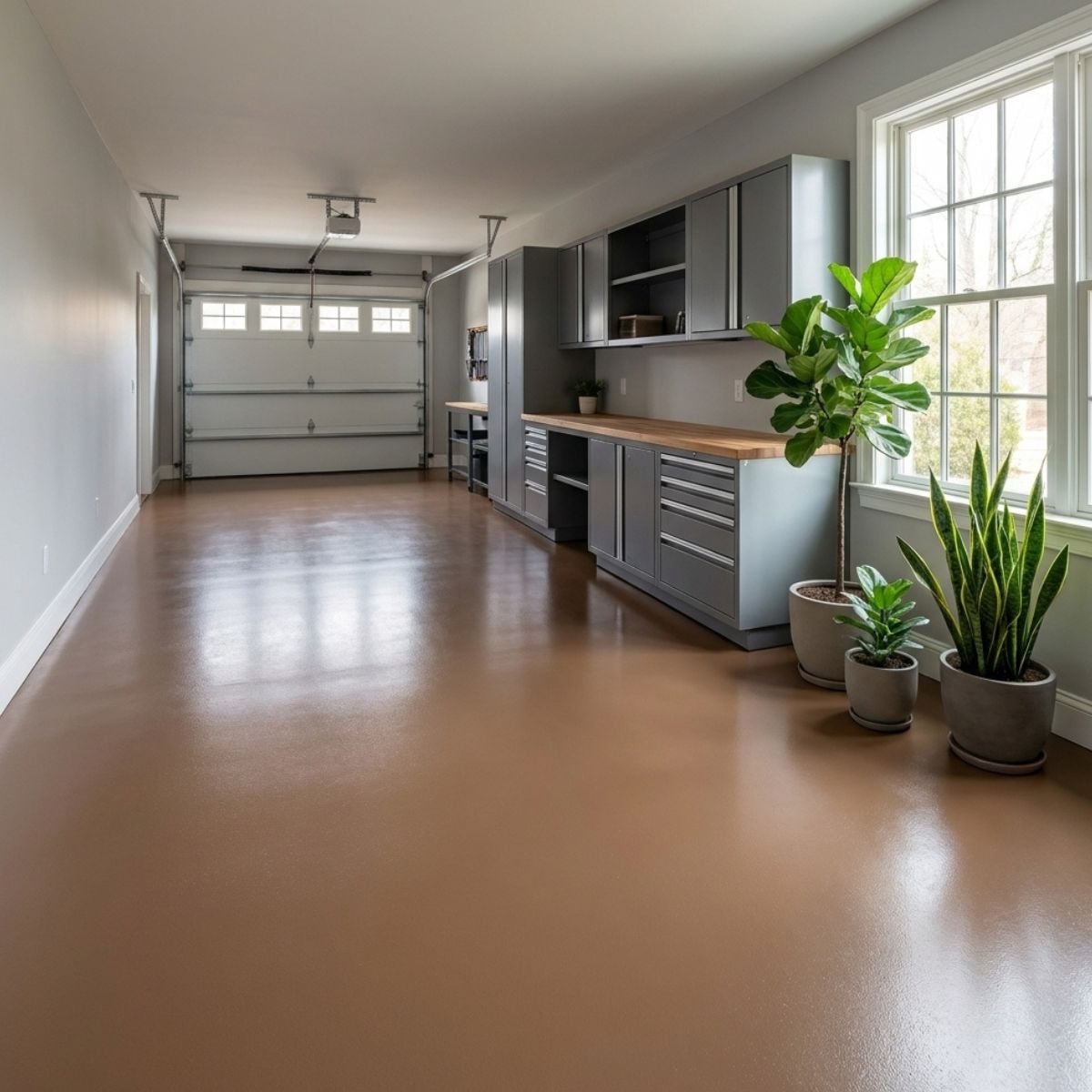
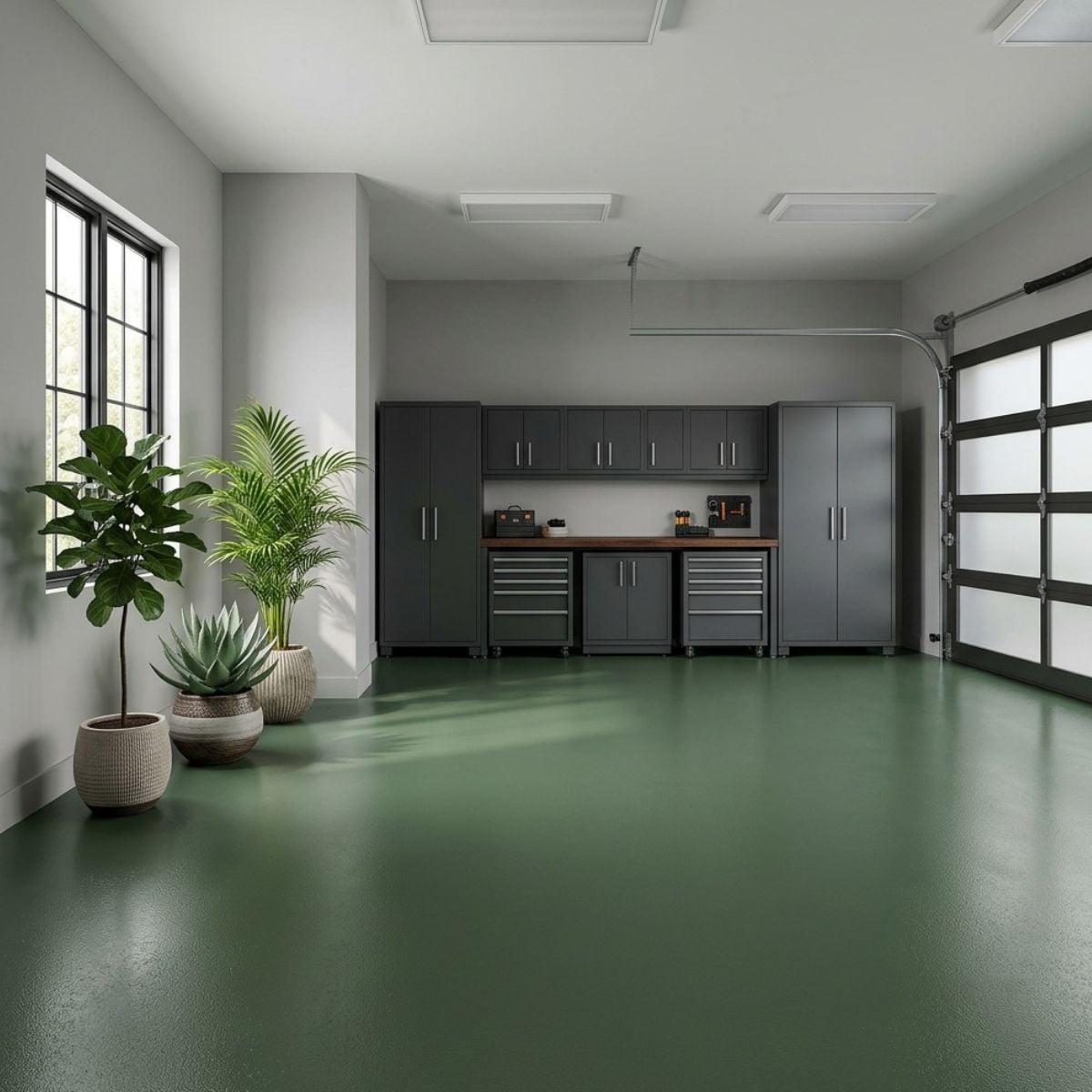
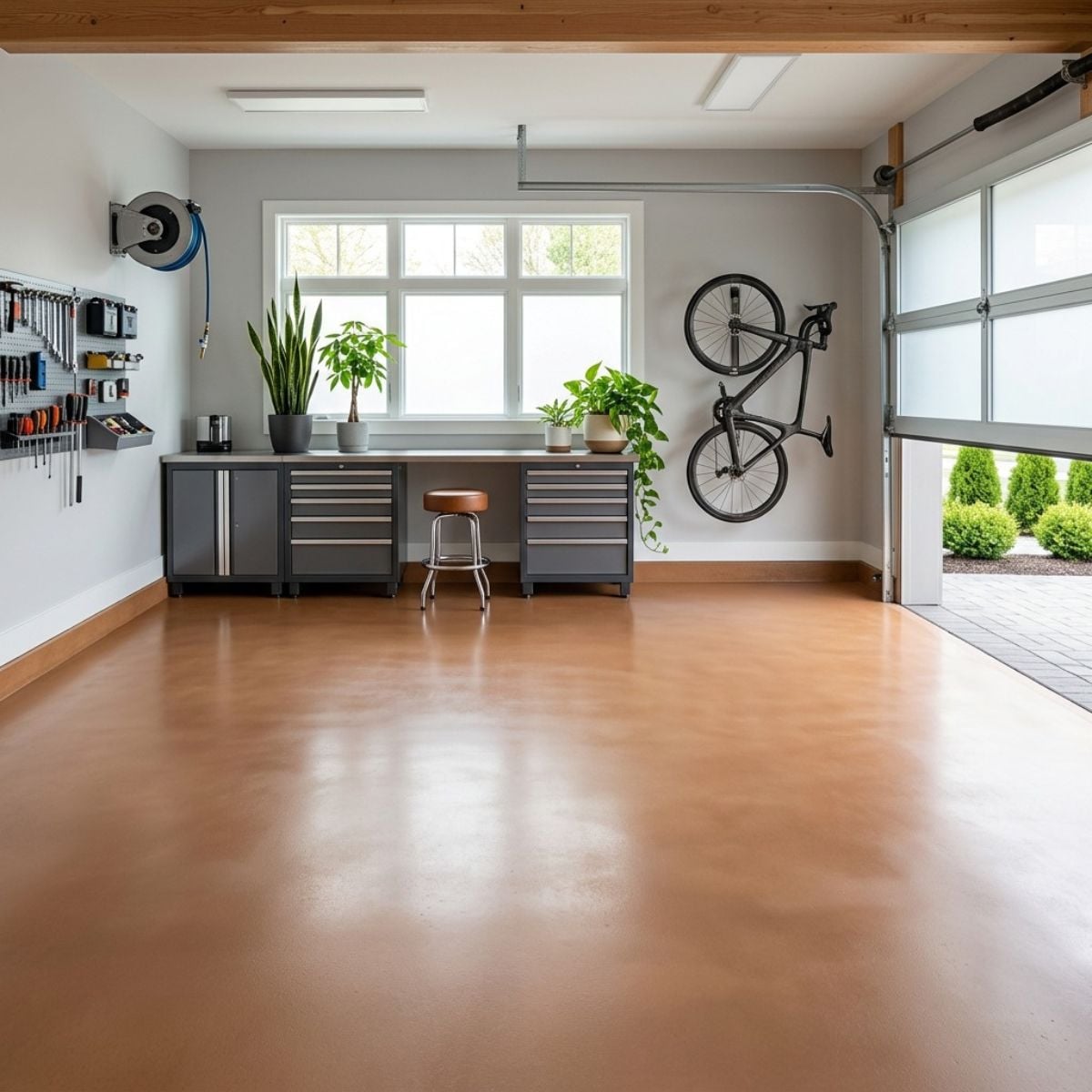
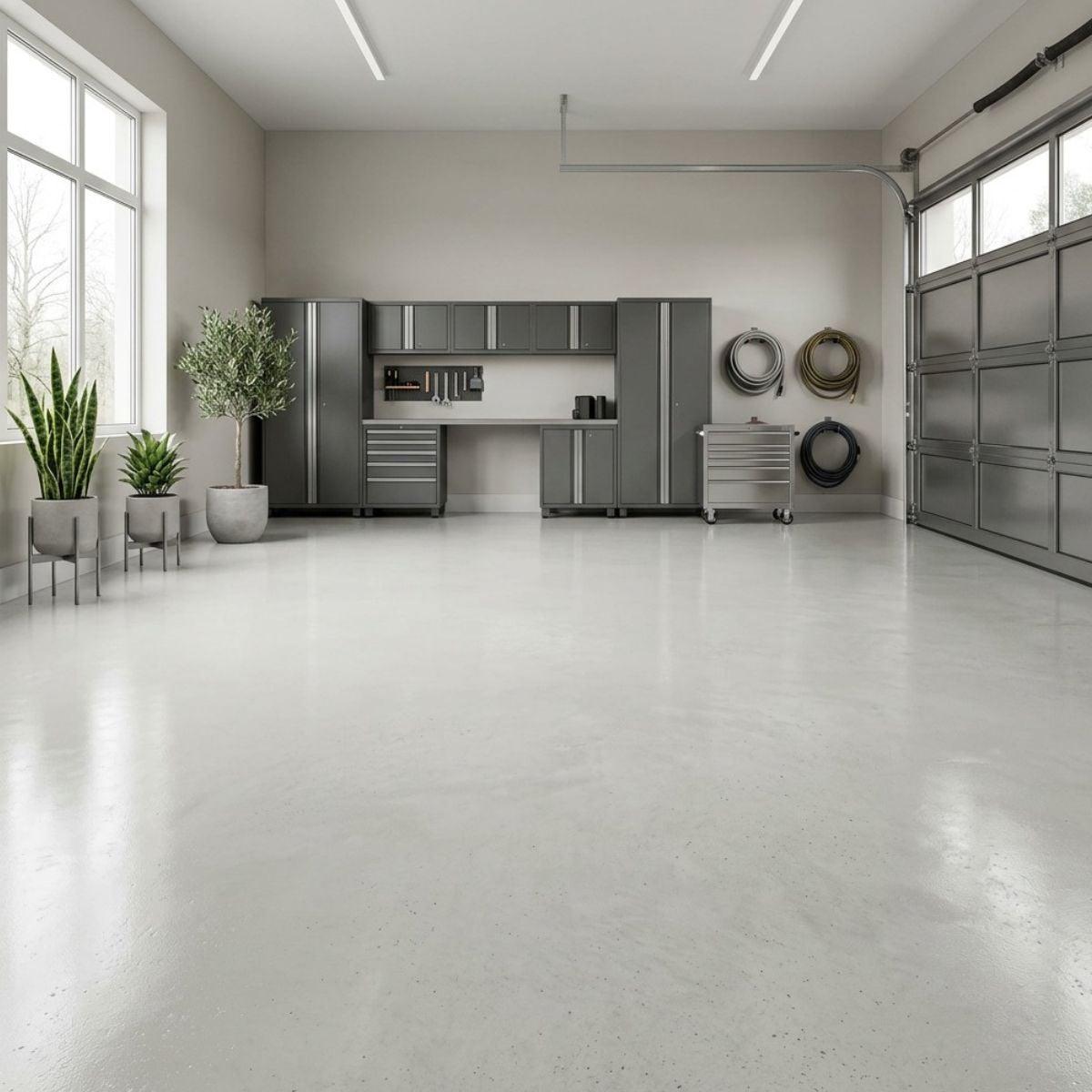
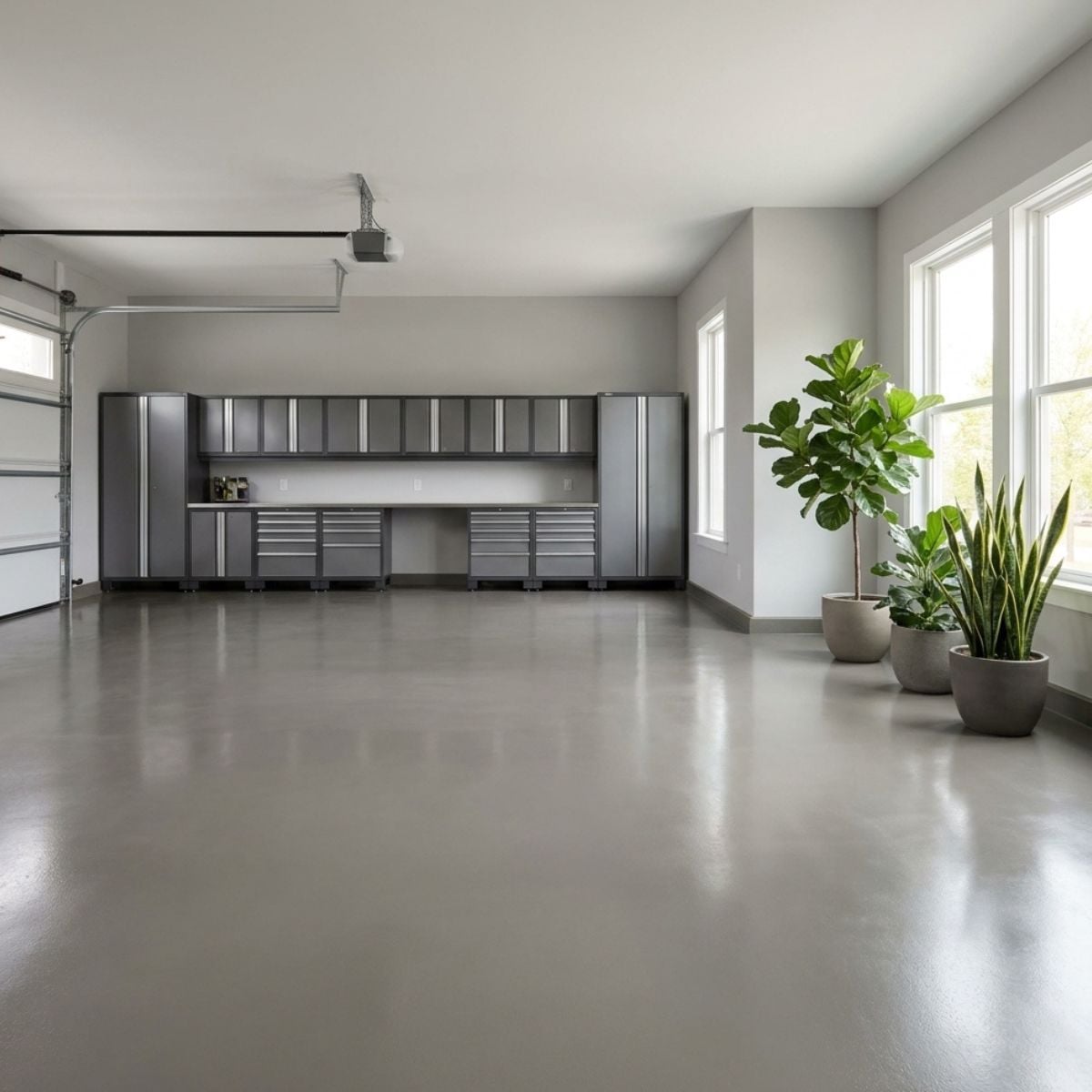
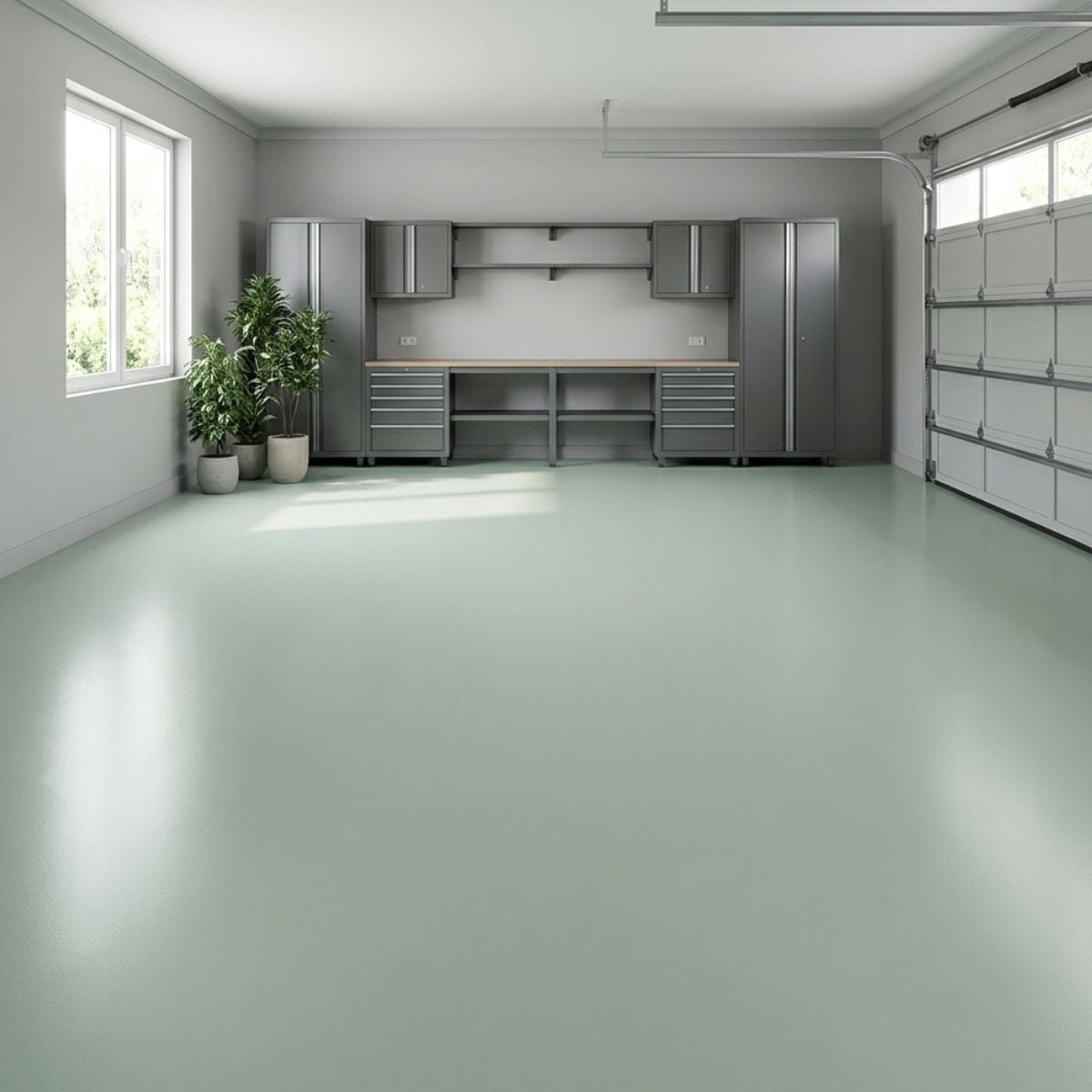
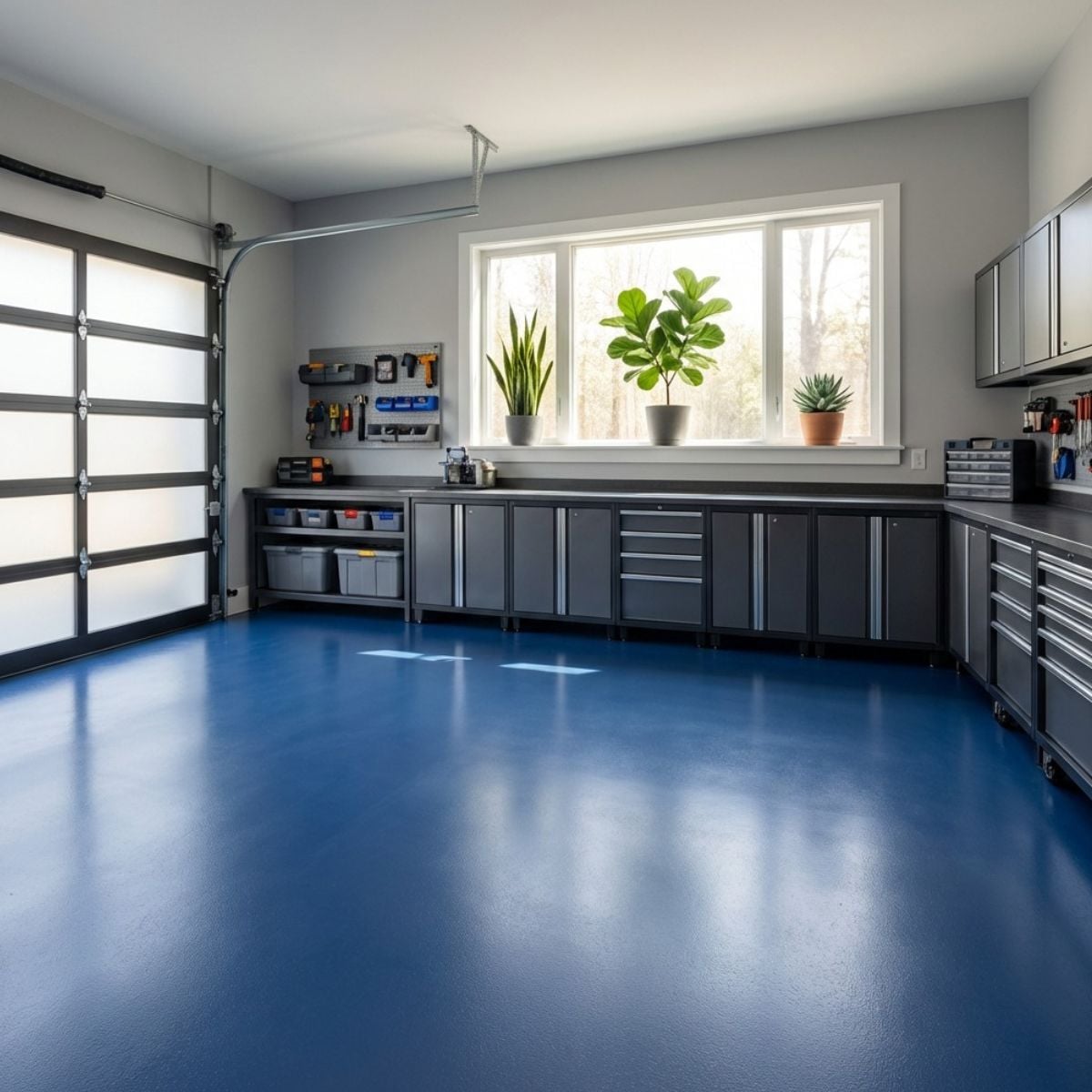
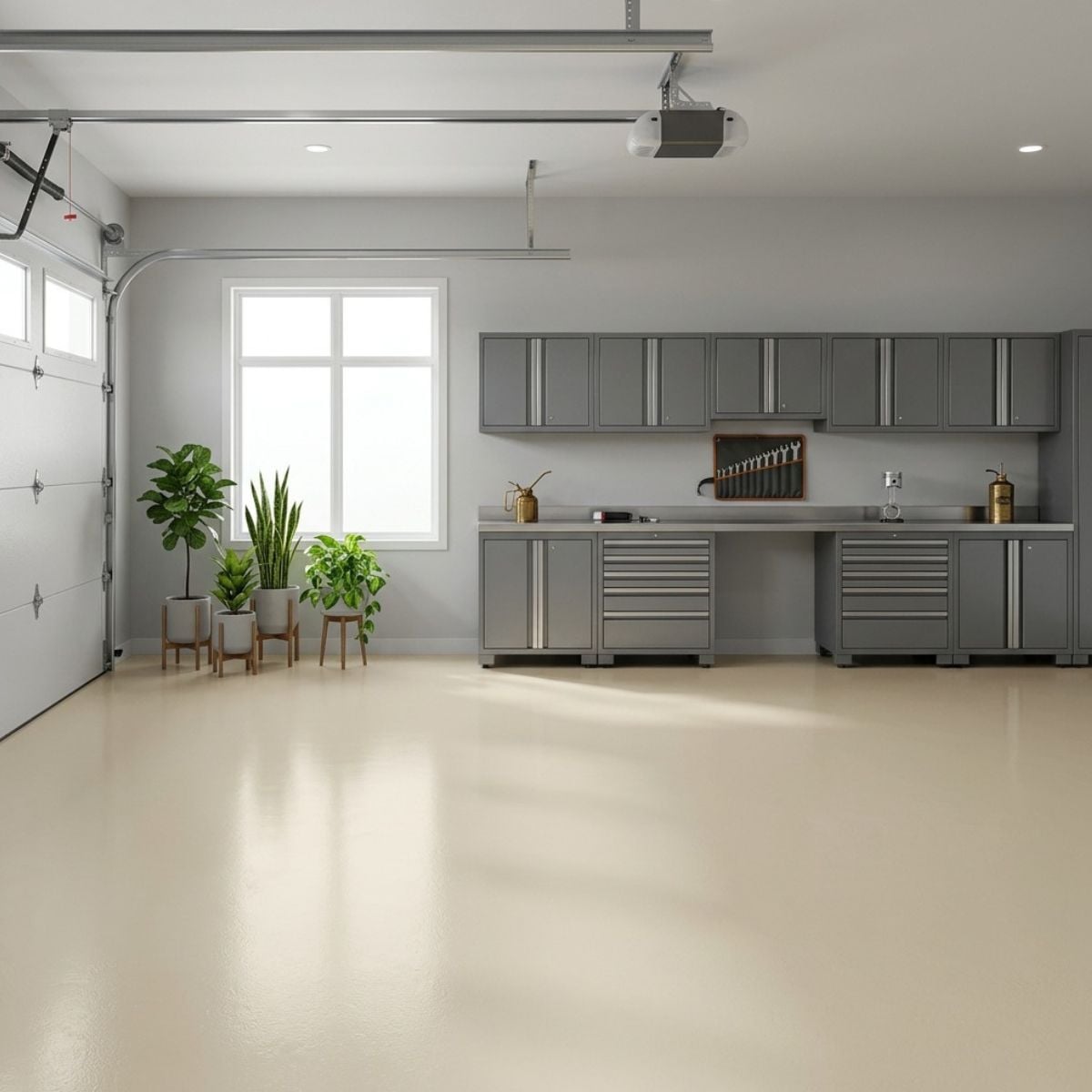
Solid Color Epoxy Floor Coating Kits — Full Color Overview
Every solid color epoxy floor coating kit on this page uses the same two-product system: Polyaspartic 85 as both the primer coat and the color coat, plus one RZ Tint pigment to give it color. No chips, no quartz, no separate top coat. The kit builder calculates both coats together as a single Polyaspartic 85 order. The table below summarizes all 13 colors, the RZ Tint used in each, coverage rates for both steps, and estimated starting cost for a 1-car garage (300 sq ft).
| Color | RZ Tint | Resin System | Coverage Rates | Timeline | Starting Price* |
|---|---|---|---|---|---|
| Solid Color Epoxy Floor Coating Kits — Polyaspartic 85 Primer Coat + Polyaspartic 85 Color Coat with RZ Tint | |||||
| Aztec Red | RZ Tint – Aztec Red | Polyaspartic 85 (primer + color coat) | Primer coat: 300 sq ft/gal (no tint) · Color coat: 200 sq ft/gal (6 oz RZ Tint per gal) | 1 Day | From $361 |
| Black | RZ Tint – Black | Polyaspartic 85 (primer + color coat) | Primer coat: 300 sq ft/gal (no tint) · Color coat: 200 sq ft/gal (6 oz RZ Tint per gal) | 1 Day | From $361 |
| Champagne | RZ Tint – Champagne | Polyaspartic 85 (primer + color coat) | Primer coat: 300 sq ft/gal (no tint) · Color coat: 200 sq ft/gal (6 oz RZ Tint per gal) | 1 Day | From $361 |
| Coronado | RZ Tint – Coronado | Polyaspartic 85 (primer + color coat) | Primer coat: 300 sq ft/gal (no tint) · Color coat: 200 sq ft/gal (6 oz RZ Tint per gal) | 1 Day | From $361 |
| Dark Gray | RZ Tint – Dark Gray | Polyaspartic 85 (primer + color coat) | Primer coat: 300 sq ft/gal (no tint) · Color coat: 200 sq ft/gal (6 oz RZ Tint per gal) | 1 Day | From $361 |
| Dark Walnut | RZ Tint – Dark Walnut | Polyaspartic 85 (primer + color coat) | Primer coat: 300 sq ft/gal (no tint) · Color coat: 200 sq ft/gal (6 oz RZ Tint per gal) | 1 Day | From $361 |
| Emerald | RZ Tint – Emerald | Polyaspartic 85 (primer + color coat) | Primer coat: 300 sq ft/gal (no tint) · Color coat: 200 sq ft/gal (6 oz RZ Tint per gal) | 1 Day | From $361 |
| Hazelnut | RZ Tint – Hazelnut | Polyaspartic 85 (primer + color coat) | Primer coat: 300 sq ft/gal (no tint) · Color coat: 200 sq ft/gal (6 oz RZ Tint per gal) | 1 Day | From $361 |
| Light Gray | RZ Tint – Light Gray | Polyaspartic 85 (primer + color coat) | Primer coat: 300 sq ft/gal (no tint) · Color coat: 200 sq ft/gal (6 oz RZ Tint per gal) | 1 Day | From $361 |
| Medium Gray | RZ Tint – Medium Gray | Polyaspartic 85 (primer + color coat) | Primer coat: 300 sq ft/gal (no tint) · Color coat: 200 sq ft/gal (6 oz RZ Tint per gal) | 1 Day | From $361 |
| Sage Green | RZ Tint – Sage Green | Polyaspartic 85 (primer + color coat) | Primer coat: 300 sq ft/gal (no tint) · Color coat: 200 sq ft/gal (6 oz RZ Tint per gal) | 1 Day | From $361 |
| Sapphire Blue | RZ Tint – Sapphire Blue | Polyaspartic 85 (primer + color coat) | Primer coat: 300 sq ft/gal (no tint) · Color coat: 200 sq ft/gal (6 oz RZ Tint per gal) | 1 Day | From $361 |
| Whey | RZ Tint – Whey | Polyaspartic 85 (primer + color coat) | Primer coat: 300 sq ft/gal (no tint) · Color coat: 200 sq ft/gal (6 oz RZ Tint per gal) | 1 Day | From $361 |
* Starting price reflects a 1-car garage (300 sq ft). All systems require surface grinding to CSP-2 or CSP-3 profile before installation. Coverage rates are planning estimates and vary based on surface porosity, profile, and application conditions. RZ Tint is dosed at 6 oz per gallon of color coat — one 6 oz container tints exactly one gallon of resin.
Frequently Asked Questions — Epoxy Floor Paint and Concrete Floor Coatings
What do people mean when they say “epoxy floor paint”?
When most people search for epoxy floor paint, they’re looking for something that will give their concrete floor a solid, colored protective finish — something that looks clean, holds up, and doesn’t require a lot of equipment or expertise to apply. The word “paint” is used loosely. What they actually want is a resin coating, and there are two main options: epoxy and polyaspartic. Both are two-part resin systems that bond chemically to concrete. Neither one is paint in the traditional sense — they don’t sit on top of the surface the way paint does, they penetrate and bond to it, which is why they last so much longer and hold up to chemicals, abrasion, and vehicle traffic in ways that latex or oil-based paint never could.
What’s the difference between epoxy and polyaspartic for a solid color floor?
The main differences come down to curing speed, UV stability, and how they handle color over time. Epoxy HP has a longer working time on the concrete surface — more forgiving if you’re spreading it for the first time — but it will yellow over time when exposed to UV light. This means that if you use epoxy as your final color coat and your garage gets natural light, the color will shift toward yellow within a year or two. Polyaspartic 85 cures faster (4–6 hours between coats versus 8–16 for epoxy), doesn’t yellow, and has better abrasion resistance. For a solid color floor where the color coat is the finished surface with no top coat over it, polyaspartic is the significantly better choice. It stays true to color, holds up better to wear, and you can be completely done in a single day.
How does RZ Tint turn Polyaspartic 85 into a colored floor coating?
On its own, Polyaspartic 85 is a clear resin — it cures to a glassy, colorless film. RZ Tint is a concentrated pigment specifically formulated to mix into polyaspartic and epoxy resins. When you add it to the mixed resin at the right dose and apply it to the floor, it becomes the color you see. In this system the dose is 6 oz per gallon — heavier than the 4 oz used in chip and quartz base coats — to achieve a fully saturated, opaque finish with no concrete showing through. Every color in the gallery above is RZ Tint mixed into Polyaspartic 85. The tint does not affect the resin’s cure time or bonding properties at this dosage.
Is this the same as the epoxy floor kits sold at hardware stores?
No — and the difference matters. Hardware store floor coating kits are typically water-based epoxy or latex floor paint in a kit form. They’re inexpensive, easy to apply, and often peel, fade, or chip within a year or two — especially under vehicle traffic or in garages that see temperature swings. The system on this page uses Polyaspartic 85, which is a professional-grade polyurea coating used by flooring contractors. It bonds more aggressively to properly prepared concrete, cures harder, resists chemicals and UV better, and is not going to peel under normal use conditions. The tradeoff is that proper surface preparation — mechanical grinding to achieve the right concrete surface profile — is required for it to perform correctly. If you skip the prep, no coating will hold long-term, professional or otherwise.
Do I need a separate top coat over a solid color polyaspartic floor?
Not for this system. The heavily tinted Polyaspartic 85 color coat is itself a durable finish layer — UV stable, chemical resistant, and hard enough to handle normal garage use including light vehicle traffic. A separate top coat would add abrasion resistance and a thicker protective film, which makes sense for chip and quartz floors where the top coat is applied over embedded broadcast media. For a solid color floor in a workshop, utility room, basement, or standard garage, the two-coat system described here is sufficient. If you need maximum durability for a high-traffic commercial space, consider upgrading to a chip or quartz system with an AU 85 aliphatic urethane top coat.
Most concrete coating systems involve multiple products, a broadcast step, scraping, vacuuming, and careful timing across two or three days. This system has none of that. Two coats of Polyaspartic 85, one color, one day. It’s the most streamlined professional coating available — and it still produces a result that looks far better and lasts far longer than anything out of a paint can.
If you’ve looked at chip and quartz floors and liked the idea but felt like the process was more than you wanted to take on, this is the right starting point. The steps are simple, the product is forgiving, and the timeline is short. You prep the floor, apply the primer coat, wait a few hours, apply the color coat, and you’re done. The entire system fits in two line items on an order form.
Chip and quartz floors are excellent choices for finished garages, showrooms, and anywhere the floor is part of the aesthetic. But for spaces where you actually work — where you’re tearing apart engines, running power tools, or doing detailed assembly — a solid color floor has a practical advantage that’s easy to overlook until you’ve spent ten minutes searching for a small fastener in a busy chip pattern.
A solid color floor gives you high contrast against the things you’re working with. Small parts, hardware, drill bits, and dropped components stand out clearly against a uniform background. Sawdust, metal shavings, and debris are easier to see and easier to sweep up. The floor functions as a workspace surface, not just a visual finish.
This is also the right choice for utility rooms, laundry rooms, basements, and storage areas where the goal is a clean, protected surface that’s easy to maintain — not a decorative showpiece. A solid color floor transforms a raw concrete space into something that feels intentional and finished without requiring a full weekend of work.
- Polyaspartic 85 — The only resin in this system, doing double duty as both the primer coat and the color coat. In the primer step it goes on thin at 300 sq ft/gal to seal the concrete and prepare it for the color coat. In the color step it goes on at 200 sq ft/gal carrying the pigment and building the protective film. Polyaspartic 85 cures to a hard, UV-resistant, non-yellowing finish and won’t yellow over time the way an epoxy color coat would. Mix at low speed for 30–60 seconds and pour immediately — never leave mixed material sitting in the bucket. The recoat window is 4–6 hours, so both coats can be completed in a single day.
- RZ Tint — A concentrated pigment added to the color coat resin after mixing. In this system the dose is 6 oz per gallon — heavier than the 4 oz used in chip and quartz base coats — to achieve a fully saturated, opaque solid color. At 6 oz per gallon, one 6 oz container tints exactly one gallon of resin. Always mix the resin fully first, then add the tint and mix briefly again. The tint does not affect pot life or application at this dosage.
That’s the complete product list. No chips, no quartz, no separate top coat. The heavily tinted Polyaspartic 85 color coat is itself a durable finish layer — UV stable, chemical resistant, and cleanable with standard pH-neutral floor cleaners.
It’s worth being straightforward about where this system sits relative to the broadcast systems on our other pages — the right choice depends on your priorities and your space.
- Easier to install. No broadcast step, no scraping, no vacuuming. Fewer products, fewer steps, and less room for technique errors than any chip or quartz system. If this is your first coating project, the reduced complexity is a genuine advantage.
- Faster to complete. Two coats with a 4–6 hour wait in between. On a standard garage you can be completely finished in the same day you start.
- Better for working spaces. A solid uniform background makes dropped parts visible immediately. On chip and quartz floors — which are intentionally busy and high-variation — small hardware blends right in. If your floor is a workspace, not a showpiece, solid color is the more practical choice.
- Less abrasion and slip resistance. Without an aggregate broadcast embedded in the coating, this system doesn’t match the scratch resistance of quartz or the texture of a full chip broadcast. It holds up well to normal foot traffic and light vehicle use, but it’s not the right choice for high-traffic commercial floors or environments where heavy equipment is dragged regularly.
- Still a real resin coating. This is not paint. It bonds chemically to the concrete, won’t peel under normal use, and will outlast any latex or box-store epoxy paint product by a wide margin. For the spaces it’s designed for, it provides genuine long-term protection with minimal maintenance.
This system uses two coverage rates for the same product applied in two different ways:
- Primer coat: 300 sq ft/gal — thin application with a flexible squeegee, no tint. This coat uses relatively little material and goes down quickly.
- Color coat: 200 sq ft/gal — thicker application with a notched squeegee and ¼” nap roller backroll, carrying the full pigment load.
The kit builder calculates both coats together as a single Polyaspartic 85 line item — showing the total gallons to order — with a note breaking down how much goes toward each step. The RZ Tint quantity is calculated from the color coat volume only, at 6 oz per gallon.
Plan to order slightly more than your exact calculation. Coverage rates assume 70°F and 50% relative humidity. Porous or aggressively ground concrete will absorb more material in the primer coat. Having a small amount of leftover Polyaspartic 85 is useful for touch-ups and far preferable to running short mid-application.
